Why are electric vehicles so heavy?
Big batteries make EVs heavier, but smaller batteries sacrifice range for lower weight. Future advances could weaken this tradeoff but remain difficult to commercialize and scale.

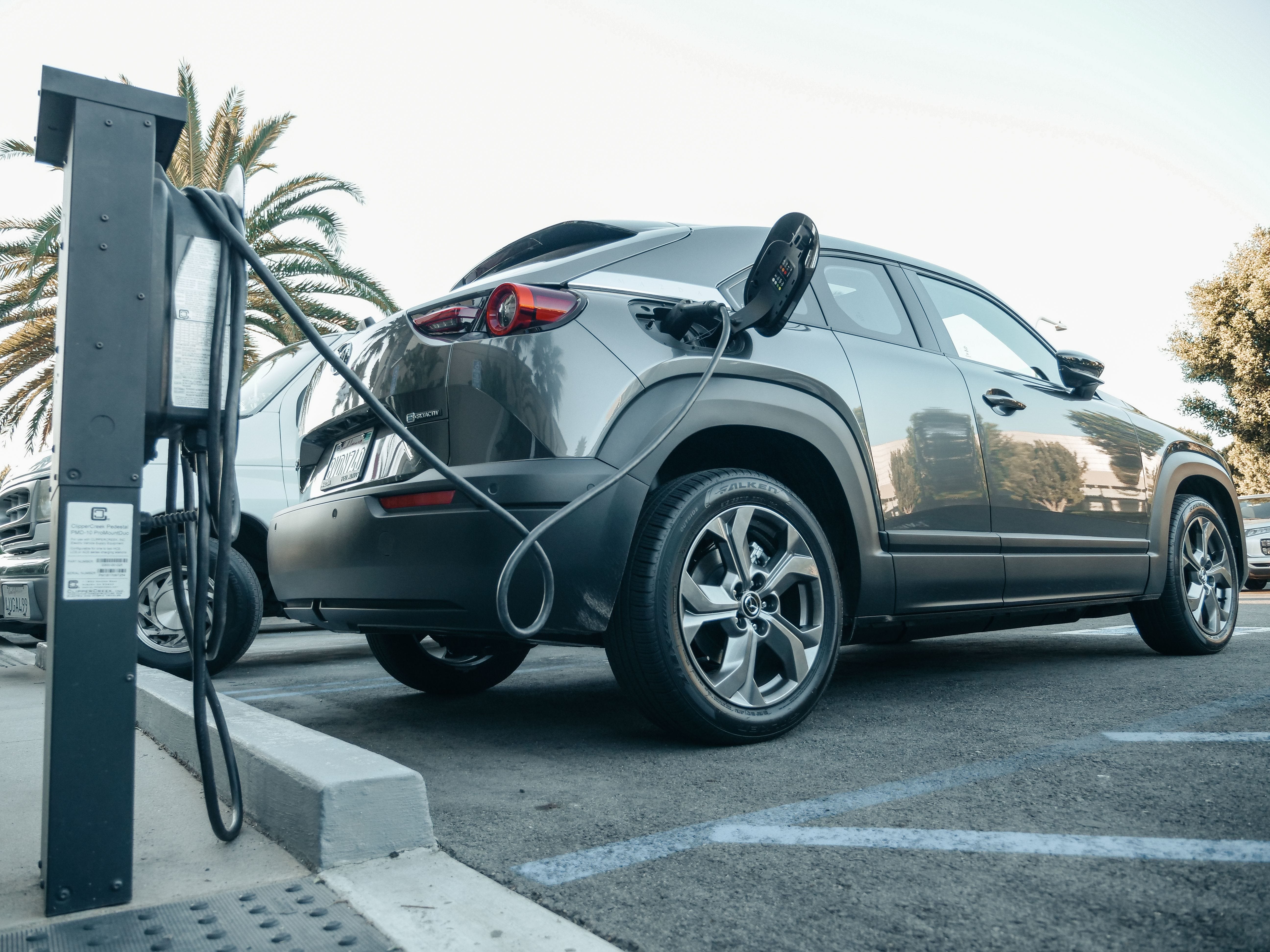
Once considered toys for yuppies and eco-warriors, electric vehicles have increased in popularity in recent years. In 2023, the Tesla Model Y made history as the first electric vehicle to top the global automotive sales chart, selling 1.22 million units worldwide, and the first time an EV emerged as Europe’s bestselling car across all powertrains. Tesla’s success coincided with a period of rapid growth in the industry, as legacy manufacturers announced investments in EV production and new entrants accelerated demand by producing cheaper models. By 2025, one out of every four vehicles sold globally was an EV.
Production and sales of EVs aren’t the only metrics trending upward. Customer satisfaction with and loyalty to battery-powered electric vehicle (BEV) technology is also on the rise. Earlier this year, S&P Global announced Tesla as the carmaker with the highest “Overall Loyalty to Make” for the fourth year in a row. Separately, a 2024 S&P Global report showed 85.1% of high-income US households that already owned an electric vehicle remained loyal to the technology, choosing to buy an EV next time they entered the market. More recently, over 96% of BEV owners surveyed by J.D. Power said they would consider leasing or buying another BEV for their next vehicle.
Not everyone is thrilled with the popularity of electric vehicles, though. A Google search for “why electric vehicles are bad” returns several articles, some from prominent resources and many from online discussion forums. Some of these criticisms are fueled by misinformation, some by rational self-interest (it’s not hard to imagine why the National Propane Gas Association would argue against going all-electric), and some by real concern about the tradeoffs of EVs. This article focuses on a key criticism in the third category, namely that the increased weight of EVs, which often exceeds that of gasoline-powered vehicles, is problematic.
Although critics often overstate the problem, the underlying claims about above-average EV weight generally hold up. To illustrate, the Tesla Model S weighs over 1,000 pounds (lb) more than the Toyota Camry, even though they are both classified as midsized sedans. However, claims about what issues heavy EVs will create and whether manufacturers can address the problem aren’t always as precise. It is unlikely that heavy EVs will overwhelm roads and bridges, as former South Carolina governor Nikki Haley famously suggested in 2023; in fact, the idea that EVs are too heavy for roads and bridges has been debunked multiple times. Moreover, available information suggests manufacturers are getting closer to achieving technological breakthroughs that could lead to lighter EVs.
In this three-part series, we will try to make sense of the debate around the weight of electric vehicles. The discussion will particularly focus on providing useful answers to the following questions:
Why are electric vehicles so heavy?
What is the concern over heavy EVs?
Can automakers reduce the weight of electric vehicles?
Why electric cars are heavy
Electric vehicles are heavy primarily because they rely on lithium-ion batteries for power. Gasoline, which powers internal combustion engine vehicles (ICEVs), stores more energy per unit of mass than a lithium-ion battery. Automakers overcome this limitation by packing massive amounts of battery material into battery packs so EVs can store enough energy to sustain meaningful real-world driving.
Electric vehicles make up for the low energy density by converting energy more efficiently, turning 77% to 82% of electrical energy into mechanical power that moves a car forward. Meanwhile, internal combustion engines convert just 12-30% of energy stored in gasoline into mechanical power, losing most of the remaining energy to heat and friction. An electric motor is also easier to design and maintain than a combustion engine because it requires fewer moving parts to deliver power.
Nonetheless, the disparity in energy density is large enough that achieving the standard driving range of 250-300 miles in a battery-powered electric vehicle requires combining hundreds or thousands of individual lithium-ion cells into a battery pack. Consequently, the battery pack is usually one of the heaviest components in an electric vehicle. Battery packs also require structural reinforcements for protection and durability, which further increases mass and overall vehicle weight.
To illustrate, an older 85 kWh Tesla Model S battery pack weighs around 1,200 lbs and accounts for approximately 26% of the vehicle’s total weight of 4,630 pounds. In comparison, the four-cylinder engine used in the current-generation Toyota Camry weighs 286 lbs. That means a single Model S battery pack can weigh as much as four Camry engines put together.
The average EV battery weighs about 1,000 lbs, but some electric vehicles have more sizeable battery packs. For example, the 2022 GMC Hummer EV pickup has a massive battery pack that weighs 2,923 lbs and accounts for nearly a third of the vehicle’s curb weight of 9,063 lbs. To put it in context, the base 2026 Honda Civic model weighs 2,875 lbs, meaning the Hummer EV’s battery is heavier than a passenger car.
We can further illustrate the weight tax that batteries impose on electric vehicles by comparing more electric and gasoline-powered models:
The electric Ford F-150 Lightning truck has a curb weight of 6,400 to 7,000 lbs depending on the configuration. Variants of the regular, gasoline-powered F-150 truck weigh significantly less: for example, the popular Ford F-150 XLT (which accounts for 35% of F-150s sold) weighs between 4,300 and 5,900 lbs depending on the trim.
The Rivian R1S, one of the most popular electric SUVs in the US, weighs close to 7,000 lbs. Most conventional three-row SUVs don’t weigh that much. An example for comparison: the Jeep Grand Cherokee L has a curb weight of 4,692 lbs.
Volkswagen’s electric minivan, the ID. Buzz weighs over 6,000 lbs, considerably more than comparable gasoline-powered minivans like the Honda Odyssey or Toyota Sienna. The Honda Odyssey weighs between 4,526 and 4,590 lbs, while the Toyota Sienna weighs between 4,610 and 4,731 lbs.
What else makes EV batteries weigh so much?
The number and size of battery cells aren’t the only reasons battery packs tend to be heavy. Battery cells have to be kept stable, protected, and cool if the battery pack is to work reliably. This task is harder than it sounds and often requires adding structural components for cooling, stability, and protection. Adding these components has the effect of making the finished battery pack heavier. We’ll explore this issue in more detail subsequently.
Keeping the battery pack stable requires preventing graphite anodes from swelling. The anode is the battery’s negative electrode and stores lithium ions during a battery’s charge cycle; during discharge, those ions travel through the electrolyte to the cathode, i.e., the battery’s positive electrode, while electrons flow through the external circuit to power the electric motor. Graphite anodes expand up to 10% in size when a battery is charging before contracting again during discharge. This repeated contraction and expansion of anodes creates mechanical stress, particle fractures, and reduced conductivity, all of which can decrease the stability of battery modules and induce structural failures.
Automakers address this problem by using compression pads and end plates to keep battery cells under controlled pressure and limit excessive expansion. A compression pad is a slightly compressible material placed between battery cells that gives the cells room to expand and contract while still keeping them under controlled pressure; an end plate is a rigid structural component positioned at the end of a cell stack or battery module to maintain compression and keep the assembly from expanding outward. Together, these components help keep cells mechanically stable and prevent excessive movement during repeated charge and discharge cycles. However, while compression pads and end plates improve durability and stability, they also add extra mass to the battery pack and contribute to the increased weight of the underlying EV.
But swelling in battery cells isn’t the only problem that automakers have to deal with. Battery cells produce a lot of heat during normal operation, rapid charging, and heavy driving; batteries may also become hot when exposed to extremely hot weather. Prolonged exposure to elevated temperatures can accelerate battery degradation and reduce storage capacity. Furthermore, if a battery’s internal temperature becomes unusually high, it can lead to more significant failures:
The internal separator that isolates the negative and positive electrodes may degrade and lose its structural integrity. If that happens, the anode and cathode may come in contact, potentially causing the battery cell to short-circuit.
Under certain operating conditions, lithium can accumulate on the surface of the anode and form tiny, needle-like structures called dendrites. Dendrite formation reduces storage capacity and increases short-circuit risk (sharp needles can puncture the separator material).
Thermal runaway may occur, leading to battery failures or fires in the worst cases. Thermal runaway happens when the internal temperature of a battery cell rises uncontrollably and rapidly. As the cell gets hotter, it generates even more heat, creating a self-reinforcing cycle that can push temperatures to several hundred degrees Celsius and spread to neighboring cells.
To keep batteries cool and prevent overheating, automakers have to install liquid or air cooling systems in the battery pack. For example, they may put cooling plates between, beside, and underneath battery modules to absorb heat produced by cells and regulate their temperature. They may also use thermal barriers between individual battery cells to prevent the spread of thermal runaway: if one cell overheats, the thermal barrier helps prevent heat from spreading to other cells, reducing the chance that the entire battery pack overheats at once. Just like the components added to regulate battery cell size, components added to regulate battery cell temperature add more weight to the battery pack and make it heavier.
The aforementioned additions make batteries durable, but those efforts can be undermined if the cells, and by extension the battery pack, aren’t well-protected. Unlike gasoline-powered cars, where the engine is mounted up in the engine bay at the front, EVs typically put the battery flat along the bottom of the chassis. This design choice increases safety by lowering the vehicle’s center of gravity, which reduces rollover risk and increases cornering stability. It also saves space: the battery pack can be built directly into the bottom of the vehicle, while the front nose can be left empty and used as a front trunk (”frunk”) to store cargo.
However, putting the battery underneath the vehicle so close to the ground exposes it to potential damage from road debris, the elements, and crash impacts. Impact from road debris, obstacles, or even other vehicles can damage the battery enclosure, while water intrusion can compromise the integrity of the battery pack’s sealing and structural reinforcement. Repeated damage can shorten battery lifespan and raise maintenance costs. as EV batteries are often very expensive to replace.
Protecting the battery from damage requires adding components that provide structural reinforcement, reduce environmental exposure, and withstand crash forces. These components also help keep the pack securely attached to the vehicle and prevent excessive movement under acceleration, braking, cornering, or impact. They also make the battery pack heavier in the process. Below are some examples:
Bracket: The bracket securely anchors battery modules and supports the pack’s weight. It also helps keep the battery in place during hard acceleration, braking, cornering, or a collision.
Housing: The housing shields cells and modules from road debris, vibration, and crash forces. It also prevents water, moisture, and dust from entering the battery pack and bolsters overall structural integrity.
What these explanations show is that the weight of electric vehicles is less a consequence of poor design and more a consequence of having to balance competing priorities. EV manufactures must deliver batteries that support long-range driving, work reliably, and are guaranteed to remain durable for a long time. In the process of meeting these requirements automakers make design choices that increase the size and weight of a finished battery pack. The increased battery-pack weight reflects in the curb weights of electric vehicles, which, as we have seen, tend to be higher than comparable gasoline-powered vehicles.
Why not use smaller batteries?
Battery mass may not always explain an EV’s extraordinary weight (the aforementioned Hummer EV would still weigh 7,000 lbs without the battery), but it is the biggest contributing factor to EV weight. Which naturally leads to the question: if battery packs make up most of the weight of an electric vehicle, why can’t automakers just put smaller batteries in EVs to reduce vehicle weight? However, automakers (justifiably) hate this one weird trick for making EVs lighter because it doesn’t recognize the tradeoffs of shrinking battery packs in exchange for reduced curb weight.
An EV battery pack is made up of hundreds to thousands of battery cells. In a conventional lithium-ion battery pack, each cell stores electrical energy when the EV is charging and releases stored energy when it is driving. How much energy is stored by the battery during charge cycles determines how long an electric vehicle can drive before the battery needs to be recharged, also known as the driving range. Existing designs tightly couple driving range with battery mass: the more cells in a battery pack, the more charge it can hold. However, adding more cells to a battery pack, or making individual cells bigger, to increase energy storage capacity adds more mass and makes the EV heavier.
The above implies a tradeoff between driving range, battery size, and vehicle weight. A smaller battery pack uses fewer cells, requires less structural protection, and significantly decreases vehicle mass. But owners will accept the tradeoff only if they plan to drive short distances, such as driving around a small neighborhood or within a dense urban area. The vast majority of daily trips do fall in this category, but owners still plan around the longest-trip scenario when choosing an EV. To illustrate, an individual who mostly drives to the grocery store or takes kids to sports practice on the average day may still want an EV with more range to account for the occasional, long-distance family road-trip.
Today, many buyers increasingly expect EVs to drive up to 300 miles on a single charge and may treat lower range as a potential dealbreaker. But, given the state of battery technology, the average EV manufacturer has few feasible options to satisfy the demand for long-range driving outside of making the battery pack bigger so it holds more charge. As long as automakers need large battery packs to guarantee long driving ranges consumers have come to expect, EVs will remain heavier than they would otherwise be if automakers used smaller batteries.
Are smaller EV batteries impossible?
Smaller batteries are not necessarily impossible. Improvements in battery design could allow automakers to design batteries that store enough charge to guarantee long driving range while remaining light enough that the weight penalty in EVs completely disappears. For example, it might be possible to design batteries with higher energy density in the future, which could allow automakers to reduce battery-pack weight without sacrificing range. At the same time, it is unclear when those improvements will arrive and whether they can be implemented at scale.
To better understand the difficulty in bringing battery-design improvements to market, we can try to understand how automakers are thinking about designing higher-energy-density batteries. The energy density of a battery measures how much electrical energy the battery can store relative to its mass. A battery with higher energy density stores a similar amount of energy with less material, or more energy with the same material, compared to a battery with lower energy density that stores less energy with the same material. If battery energy density improves, manufacturers could potentially use smaller, lighter battery packs while they continue to deliver long-range driving capabilities.
We can understand this improvement by using an analogy. Think of electrical energy as water packed for a hike, the water bottle as the battery pack, and the distance you can hike with a single filled bottle as the range. You can hike a longer distance with a larger water bottle because you can hydrate more frequently and avoid collapsing from exhaustion, but your backpack becomes heavier and the weight you carry around goes up. A smaller water bottle weighs less and lightens your load, but it becomes difficult to hike the same distance you did when you carried a bottle with more water in it. Improving energy density is the equivalent of switching to a new energy drink that provides more hydration per drop than regular water, which allows you to hike the same distance while carrying less liquid and a significantly lighter backpack.
One way battery manufacturers and automakers are trying to achieve higher energy density is by replacing conventional lithium-ion batteries with newer solid-state batteries. Conventional lithium-ion batteries use a liquid electrolyte, which is usually a chemical made from dissolved lithium salts. Solid-state batteries replace the liquid electrolyte with a solid material made from ceramic or polymer and, crucially, are capable of storing more electrical energy than lithium-ion batteries with the same amount of battery material. With solid-state batteries achieving higher energy density, automakers could design long-range EVs with small battery packs and weaken the relationship between battery mass and range.
But commercializing and scaling solid-state battery technology is difficult. Solid-state batteries are harder to manufacture, with costly raw materials, complex fabrication processes, and high equipment costs among the problems that battery manufacturers and automakers have to overcome. In contrast, lithium-ion battery production is cheaper and well-understood; moreover, using conventional lithium-ion batteries allows carmakers to benefit from years of industry-wide investment in commercializing the technology, building robust supply chains, and expanding production capacity.
Lithium-ion batteries continue to remain the standard for battery packs largely because they make more economic sense for automakers today. The appeal of electric vehicles may be growing, but price-sensitive consumers may still switch to gasoline-powered vehicles if EV prices increase too aggressively because manufacturers adopt expensive, cutting-edge battery technology. Efforts to make solid-state batteries more reliable and easier to mass-produce are underway, but it is unclear when those efforts will bear fruit.
For now, EV manufacturers find themselves in the unenviable position of having to decide which tradeoffs to accept. They can make batteries smaller and lighter, bringing down vehicle weight, but that requires accepting lower driving range. Or they can leave EV batteries unchanged to satisfy buyer demand for long-range driving, even if it means selling heavier EVs. Until battery technology improves enough that the relationship between battery size and driving range becomes less rigid, reducing the weight of electric vehicles will require balancing two equally imperfect tradeoffs.
Why are heavy EVs a problem?
In the introduction, we said increased weight is one of the more persistent criticisms of electric vehicles. So far we've focused on the reasons EVs are heavier on average instead of diving right into the substance of criticisms surrounding the weight of EVs. The next article in the series will try to answer what is arguably the second most important question in the EV-weight discourse: why are people concerned about heavy EVs?
This article will look at the various issues that EVs potentially create or exacerbate due to having higher-than-average mass. More specifically, we’ll try to evaluate the perceived impact of heavy EVs on road wear, highway safety, collision risk, and tire pollution (among others). The final article will then explore the feasibility of building lighter EVs and consider the various approaches automakers are experimenting with or actively implementing as part of efforts to significantly reduce the weight of electric vehicles.
Article soundtrack
The Weight by The Band
Discussion about this post